

Faith Leap – Amelia Schriner
Sunlight – Erin Jamieson
The meaning of this bouquet of flowers – Rowan Tate
A Month Of Sundays – R. Gerry Fabian
The Aging Lothario and Femme Fatale – E. P. Lande
Sunflower – Morgana Soleil Faye
Sometimes happiness eludes me… – Nasta Martyn
Consummation – Rowan Tate
Corners – Shannon Shreibak
Every Moment I Love You – Breanna Claire
Stay – Sara Phelps
Sometimes I remember you – Nasta Martyn
The Sea-Sandal Maker on the Cliff – Subramani Mani
The Blue Angel – John Grey
To: Persephone – Alarson
Journey to the Sea – Edward Alban
The Kind of Thing You Can’t Undo – Isobel Bradshaw
I will not lose… – Nasta Martyn
Faith Leap

Sunlight
I catch sunlight
in a mason jar
the way I used to
capture fireflies
golden & milky
creamsicle orange
& crimson leaks
from the lid -warmth
spreads to my fingers
until I’m radiating
light I’d hoped
to contain
The meaning of this bouquet of flowers
By Rowan Tate
Because I have nothing to offer you but this place
in me that wears the indent of your hand
on my heart. Because you made my name
delicate and vulnerable, skin see-through
and blushing. Because you made me scrambled eggs and
taught me how to castle, because you were someone I could
fall asleep next to until I decided I didn’t want to anymore.
Because now I thank the doors for their repetition, the stairs
for not moving and September for being the sunscape I am
moving through, because I want to tell you there are days when the
light makes the kitchen yellow and I remember
everything, all of it, even something as small as
the shape of your ears.
A Month Of Sundays
People are softer
on Sunday mornings.
They smile wider
and wave longer.
People are slower
on Sunday mornings.
They stop to chat
and nod and smile.
People are safer
on Sunday mornings.
They walk carelessly
and let their children run free.
People are warmer
on Sunday mornings.
They visit with neighbors
and cook large meals.
There should be more Sundays
in the rest of the week.
The Aging Lothario and Femme Fatale
By E. P. Lande
When the police found Nathan wandering without a sense of who he was, his daughter decided that she had to find him an assisted living facility. She made an appointment for them to interview one in the vicinity of her neighborhood.
As they approached its entry, Nathan turned to daughter.
“You know who lives here,” he said.
“Yes, Dad. Older people like yourself who no longer feel they should be living on their own,” she told him.
“Older women live in places like this one,” he told her, “…and older women are horny,” he leered.
Understanding her father and his lack of propriety, Nathan’s daughter took him by the arm and led him into the building, without comment. When the appointment was over and she had brought Nathan back to where he was living, his daughter received a phone call.
“We’ve had a rather uncomfortable situation here regarding your mother,” the caller told her. The mother of Nathan’s daughter — the first of Nathan’s many wives he had had…and divorced…over his lifetime — was living in another assisted living facility in the same city.
“Has there been a problem?” she asked.
“Not exactly….” the caller said.
“Please, tell me what happened.” Nathan’s daughter was beginning to worry.
“It seems…well, okay…your mother was found…. I’m not sure how to put this, but, okay. Your mother was found in the common area this afternoon, where many residents congregate after their noon meal….”
“Are you telling me that Mom was in that area with other residents….” “Yes, in full view of twenty or so other residents, your mother was seen fondling one of the older man’s…but, we caught her before she went any farther than pulling down his zipper.”
Sunflower
Did you know sunflowers don’t actually track the Sun’s position?
You tell me this.
Only immature sunflowers eagerly follow wherever the Sun goes.
At the time, they called this heliotropism, a response to the sun.
I nod, holding back from saying something stupid.
Of course, now we know it wasn’t them responding to the Sun itself.
Rather its light, hence the term phototropism.
Isn’t that fascinating?
I say so as much, and you laugh.
And just like that, I find myself awestruck
Just how, luminated by the summertime glows,
Underneath the tree, leaves filter the rays of light
As to reflect the beauty that is your smile.
Perhaps I’m too young to understand these feelings I hold, yet
I lean forward anyways, watching you.
Like a sunflower,
I seek out my sun’s embrace
The love of its warmth.
Sometimes happiness eludes me…

“In the house, where there are only rocks, I was born a long time ago, back in the last century…there I look for moments of white fragments, those that wounded my thin hands…I look at the stars and probably someday they will be warmer and warm me…but I forget at night in my sleep everything that was before, and a new day, like a stream, washes away the stones on the old ledge of the rock…And I start to build my little house from scratch…”
Consummation
By Rowan Tate
I will lie down in you, eat
my meals at the red table of your
heart. I will eat
the animal out of your body,
bow my head and pray. I can
make every breath in him a
hallelujah, my name in his throat
like a jewel.
Corners
Nina had chosen the haircut to become someone new, but no blunt fringe or butchered bob could ordain a different life. Nina kept flattening her hair against her skull, as if pressure alone could force the change. When the clock barked at her, she left for the Autobahn.
Ben was out with his own friends. She’d been looking forward to the show for months. He never wanted to come — never understood the centrifugal pull of the pit, the strange, half-violent freedom of throwing your body into strangers and being caught. It was one of the unspoken treaties between them: Nina would feed that part of herself alone, like an animal sniffing along the edges of the city, scavenging for what it needed but wasn’t supposed to want.
The usual gauntlet awaited her: the pat down at the door, the awkward exchange at the ticket counter, the shuffle through the wristband line. She moved through it like someone playing an old game they no longer had the stomach for. At the bar, she ordered the strongest drink she could think of without feeling like a full-blown lush. As she handed over a crumpled handful of bills, a hand struck between her shoulder blades — stiff, too familiar. She spun around, the bile already rising in her throat, half-ready to tear whoever it was apart.
But it was him. Wes.
“How ya doing, kid,” he said, his voice careless and easy, the way it always had been, brushing against her skin like smoke.
They hadn’t seen each other in eight years, but he still looked at her like she was unfinished—sixteen years younger, always just out of reach, always just a little too much. Enough years between them for a joke about being old enough to be her father. Enough years to make it not funny.
Even with the ragged haircut, even after all this time, he’d spotted her immediately—the nervous hum around her, the frame he knew by heart, the tattoos threading her arms like a map he could still read blind. She was unmistakable in ways she would never fully understand, ways he would never explain. Without asking, he nudged her toward a corner of the floor he’d claimed—close enough to feel the crowd’s shudder in their teeth, far enough not to catch an elbow to the face.
Nina sipped too fast, her drink pooling sour behind her tongue, waiting for him to say something, anything. Waiting for the rhythm to find itself again. She couldn’t even remember why they had stopped speaking five years ago. Only that one day she woke up and realized he was gone. Like a body part she hadn’t noticed rotting until the smell set in.
“Where’s your wife tonight?” she asked.
The words were acid in her mouth. They had stopped talking long before he got married. It was like showing her full hand at once: how much she still watched him, how much she still needed to know.
Wes smiled the way people smile when they know you’re still bleeding for them. “She’s back in Knoxville,” he said. “Doesn’t like shows like this.”
“Same,” Nina said too fast, her voice scraping along the inside of her teeth. “My husband’s out with his finance bros.”
Wes smirked. “Never thought you’d shack up with a civilian, kid.”
The house lights cut to red, flooding the room with something closer to blood than warmth. Nina felt the sweat collect under her sleeves, the cheap gin itch rising along her skin.
“I guess we both ended up where we never thought we would,” she said, quieter than she meant.
They stood side by side through the dirge of the opening band, both pretending to listen, both pretending they didn’t notice how close they were standing. Some new group — young and eager, all screams and no shape. Neither of them saw the appeal. It was a small mercy, having something to silently agree about.
They made jokes about getting old, about losing their grip on the things that had once made them feel alive, things that had once made them feel like themselves. Nina slurped down the last of her gin and tonic, ice rattling against her teeth, and Wes—wordless, familiar—left to get her another without asking, just like he used to when they spent nearly every night together. He had always been like this with her: a well-trained dog, eager, awkward, pretending it was just duty, never daring to admit the devotion it cost him.
When the show finally broke apart, Wes turned to her—the friend he missed more than he could admit, the girl who had stopped being a real person and started being a necessary ache.
“Wanna grab a round next door?”
Nina nodded, the answer already alive in her body before she could think better of it.
Wes gripped Nina’s elbow with a thoughtless intimacy, like something he forgot wasn’t allowed anymore. Her body, traitorous, pulled her straight back into it — back to the days when they would build twelve-hour bar crawls across the city just because they had too much to say, too many things that could only be said drunk and laughing and half-leaning into each other. Back to biking twenty miles up and down the edge of Lake Michigan, screaming at each other over the roar of the wind, because the thoughts never stopped coming. It was like they knew, somehow, they wouldn’t get forever—that they had to pack as much life into the hours as possible, wedge themselves into one person if they could.
Wes missed the way Nina still looked at him, like he was something to be studied, not endured. He missed the lazy worship she couldn’t help but spill toward him—the way it fed some old, greedy part of him. Camille didn’t look at him like that anymore. Camille tolerated him, entertained him, posed him next to her dreams like a supportive backdrop: the good husband, the mountain-town accessory, the man helping her build a “wellness brand” in the soft, crumbling foothills of Tennessee. With Camille, he was an afterthought, a murky shadow in the corner of her ambitions.
But with Nina — he was necessary. An organ. A hand she still instinctively reached for in the dark. Being near her flickered something awake inside him, something he hadn’t touched in years, not since Camille had insisted there be no other women in his life. Not even old friends. Especially not Nina.
They slid into the rotting corner seats at the L&L, without speaking, without having to. It had always been corners — always. Neither of them could stand the intimacy of craning toward each other, the ugly bow of the spine it forced. A corner meant you could sit shoulder-to-shoulder, facing the world together or ignoring it together, no difference.
The L&L was falling apart right alongside them. The leather cushions splitting open at the seams, foam bulging out like wounds that had given up healing. Wes’s back ached from standing too long in worn-out Vans, his insoles forgotten at the hotel. Nina felt the slow, shameful burn of the gin rash spreading under the ink on her arms. Old betrayals of the body. Old markers that time was moving, even when nothing else seemed to.
They were both coming apart. And they missed each other with a desperation too thick to name.
Wouldn’t name it.
Couldn’t.
In the bathroom, Nina leaned over the cracked sink and puked, hard. The beer and gin had curdled into something chestnut brown and unholy. It splattered up the sides of the porcelain like bruises. She wiped her mouth on her sleeve, the fabric scraping rough against her skin, then bent down and drank from the faucet, metal and blood blooming on her tongue.
“You okay?” Wes asked, eyebrow cocked, leaning casually against the doorframe. He recognized that sway in her walk immediately. Nina was always fun to drink with — until she wasn’t. Until she toppled over some invisible ledge she didn’t even know she was walking toward. Nina shook her head wordlessly, picking up her beer and forcing a sip, hoping it would cover the bile still coating her mouth. Wes clocked it instantly. He knew the moves too well.
“You used to puke right at midnight when you were in your twenties,” he said, smiling like he thought it would make her feel better. Like nostalgia could cover the shame. Instead, it lit a match inside her.
“Fuck you,” Nina said, voice low and mean, and shoved past him, her body barely brushing his. Out the door. Down the street. Fast enough that her chest hurt.
Wes caught her at Clark and Waveland, hands light on her arms, half-laughing, half-apologizing without words. Somehow, stupidly, she let him steer her back inside. They killed another round, talking around the rot in their lives. Their dying marriages. Their loneliness. The new kind of loneliness that tasted different—colder, sharper, more final—than the loneliness they used to drink through when they were kids.
Nina stood up, said she was going to the bathroom, this time not to vomit — just to cry. She locked the door and let it happen, fists pressed to her eyes, shaking. The sound of a knock jolted through her like a static shock.
“Be right out,” she croaked.
“It’s me.”
She cracked the door open, just enough for Wes to slip through sideways like water. She had never seen him move like that—not for anyone, not even for her. Without a word, he backed her into the wall, the cheap wood paneling pressing into her spine, a collage of graffiti and stickers biting at her skin through the fabric of her shirt, his forehead pressing against hers. Closer than they’d ever been. Still not close enough. His lips hovered centimeters from hers. Nina could feel the shape of the kiss before it even happened — a kiss eight years too late.
But even then, even there, something clawed up her throat and took precedence.
“Why did you leave?” she whispered, her voice raw and breaking against his mouth. “I’ve thought about it for years. I don’t understand.”
Wes flinched — a full-body wince — like her words were a gunshot. He tried to shape the truth into something prettier, smaller. Something survivable.
“I guess I woke up one day and just… ran out of things to say,” he said, shrugging like it didn’t matter. “I thought you did, too.”
It landed like a fist to her chest. It landed like a fist. She staggered. There was no dignity left in it—just the hurt, shining and simple.
“I wanna go home,” she whispered, the words barely escaping her mouth — less a decision than a spell she was trying to cast on herself, a way to outrun the urge to press further, to tear the answers out of him with her bare hands.
She shoved the door open and staggered out into the night. She didn’t even think — she just walked, fast and aimless, the cold air slicing her cheeks, every step pressing tears closer to the surface. It was the same thing she had done years ago, the last time he humiliated her in this exact place — when she had asked if he would ever kiss her, and he had said no, like it cost him nothing. But this time, Wes followed her.
They moved together without speaking, their bodies tracing the perimeter of Graceland Cemetery, where coyotes prowled the overgrown graves and the broken wings of old statues jutted against the night sky. Birds shifted on crumbling tombstones, their shapes black and soft against the faint orange glow of the streetlights.
Neither of them said what they needed to. They talked about stupid things instead—weather, bands that had broken up, how cheap beer was better back then. Their voices low, breaking against the cold air. It wasn’t small talk. The dead city around them hummed. Trees clawed at the streetlights. Gravel crunched underfoot.
Nina kept her eyes forward, but it didn’t stop the words from bleeding out. Nina opened her mouth, then closed it. When she spoke, her voice barely carried.
“Are you happy? Married and in Tennessee?”
Wes gulped down air like he was drowning. No one ever asked him that way. Not even Camille. He opened his mouth, then closed it. His feet stopped moving without telling the rest of him.
“No,” he said finally. “But I don’t know if I would’ve been happy anywhere.”
Nina nodded, slow and heavy, like she’d already known. Maybe she had.
The wind kicked up off the cemetery, sharp enough to raise goosebumps along her arms. She didn’t move away from him. Neither did he. For a second, it felt like they might crash into each other. Finally. Stupidly. The old hunger, the old ache vibrating between them like a tripwire. But Nina stepped back first. Shoved her hands deep into her jacket pockets like an apology.
“This is me,” she said, nodding toward the building in front of them. “How are you getting back to the hotel?”
“Do you want to come with me?” he asked, the desperation threading through his voice before he could kill it.
Nina shook her head. If she opened her mouth, she knew the answer would spill out: Yes, yes, burn it all down, I’ve kept the match for you in my back pocket, hoping you’d come back through and strike it.
Wes looked down at his shoes. “I’ll get one last drink at the L&L,” he said. “Then head back.”
They stood for a second longer, useless in the cold. Then they moved through the dark side by side, not speaking, their shadows swallowed whole by the night.
Nina woke the next morning still in her jeans, Face crushed into the sagging couch cushions. Ben was already gone, probably pissed, probably pretending not to be. She didn’t feel hungover. She felt skinned alive. Like someone had taken a spoon and scraped her hollow. Wes had taken something from her again. Like he always did. And left nothing good in the trade.
She fished her phone from the mess of her clothes on the floor, desperate for distraction. The home screen was stacked with notifications:
- Emails marked “urgent” that were already rendered meaningless.
- Discount codes for apps she never used.
- A fertility app pop-up: Today’s forecast? Horny with a chance of rage.
She cleared them all like brushing dirt from a grave — until one stopped her cold.
🚨 Hit-and-Run Reported
Location: Clark & Waveland
Time: 4:57 AM
A man has been struck by a vehicle in a hit-and-run. The car fled northbound. The victim was unconscious at the scene. Emergency responders are en route.
Please avoid the area and allow first responders to access the scene.
There was no reason she could name, no chain of logic she could follow, but she knew it: Wes must have been there, caught against the car like a deer in the blind flash of headlights, his balding scalp torn and tangled in the metal teeth of the grill. She imagined his blood slicked across the hood, bright and sharp against the paint, like a handful of rubies scattered in the dark.
She could have called him with a half-hearted wellness check—confirm that her worst nightmares were not always predestined for a reality. She could have pulled something — anything — from the wreckage of the night. But instead she stayed where she was, small and shivering inside the life she’d ended up with, the life that seemed to hum with all the wrong choices.
She thought better of herself, which was to say she thought worse. She thought everything of him — the pieces she refused to mourn properly, the half-alive memories she kept pressing breath into, until they sagged and shuddered and begged to be let go. Life, life, more life—until even memory became a cruelty. Somewhere, in the corners she refused to look, he stayed.
Every Moment I Love You
Every moment I love you,
And in between is the judgment of the artificial.
The energy of the self is dissipated
Preparing for conversations
That shatter on contact.
I take your hand in mine and draw it to my heart,
While the wage slaves of the superego
Mass-produce legions of steel men
To knock down my dreams.
Every moment I love you,
And in between is the burden of novelty.
The fires in his heart doused by liquid crystal,
The lovesick poet needs a new style;
The lover does not.
I brush your hair from your cheek and watch it fall back,
While the avant-garde of the dime-store romance
Seeks a new date on the calendar
To sell chocolates.
Every moment I love you,
And in between is the hollow triumph of salvation.
The sacred carnival does a brisk business
When heaven is a greater reward
Than hell is punishment.
I softly sing your name in your ear like a lullaby,
While the wise men in the eye of their self-made storm
Proclaim the unity of all things,
And the end of knowledge.
Every moment I love you,
And in between is the addiction to approbation.
An atta boy never grows into a man.
The inflated specie of success
Buys one more chance to fail.
I gently hold your earlobe between my lips, then let go,
While the audience applauds on command,
And a cheap smile tells a soulless voice
To tell me what I’ve won.
Every moment I love you,
And in between is the art of too-clever-by-half.
Saying more, and thus less, than we mean,
The man’s nervous chattering
Is the writer’s genius.
I twirl your newest gray hair around my finger,
While the oracles of the clear-cut forest
Who know everything and feel nothing
Numb us with culture.
Every moment I love you,
And in between is the politics of forced selfishness.
A proud continent fractures into islands.
One hundred million elections
For President of Me.
I pin your big toe to the mattress with my big toe,
While the conscripts of the ghost army of greed,
The only community they know,
Wave their black-and-white flags.
Every moment I love you,
And in between is the enforcement of optimism.
The bully’s deadliest weapon is a smile.
A steady diet of platitudes
Fattens us for slaughter.
I stroke your cheek with three fingers, then two, then one,
While the doughboys make war on a new disorder,
And the pretty sunflowers wither
For want of rain clouds.
Every moment I love you,
And in between is the tyranny of duty.
Every hero is a villain to himself,
And every savior is a martyr,
When love is a labor.
I bring your hair to my face to smell yesterday’s shampoo,
While the farsighted giants with hearts of fool’s gold
Lift their eyes up and reach their hands down,
And miss what’s right in front.
Every moment I love you,
And in between is the justification of being.
In bullet-pointed autobiographies,
We invent new reasons for earning
The same scraps of bread.
I pull the sheets over us and find your lips in the dark,
While the erstwhile dreamers of the eternal now
Turned wakeful bureaucrats of time Subsist on pie charts.
Stay.
By Sara Phelps
I remember how I took you to that coffee shop in Boulder because I thought it looked cool, but all the coffees had mushrooms in it and we didn’t want that, so I took you to this other coffee shop by the Flat Irons, and I remember the girl told us to get the Ice Cap so we did and I remember it was so freaking good, and I remember after that taking pictures of each other all the way up in between the Flat Irons, thinking we might fall all the way down, and I remember you pointing out how I was always smiling even though we were hiking for days in the middle of nowhere in the freezing cold rain in the mountains, and I remember it was sunset in the freezing cold rain in the park and I thought you were going to propose to me because you had your hand in your pocket, even though I remembered you aren’t the marrying type, and I remember the first boy I loved and how he said he wanted to marry me, even though I remember how he traumatized me, and I remember that that love was just innocent and desperate, but our love now is actually real and deep, and I remember how I thought you were going to propose but it was fine that you didn’t because I just wanted to be with you in the freezing cold rain, because that’s when, it seems, you love me the most, and I remember when I was the one to get you to the top of Sky Pond, even though I remember you were the one to convince me to go on the hike in the first place, and I remember that freezing cold river we had to climb that July just to make it, and I remember all the times you didn’t say anything at all, actually, and just held me as I cried, and I remember when you walked in the door how I knew we would have a story, and I remember never really feeling that way about anyone at all before then, I remember taking you to the park because you felt depressed and how the fresh air made you feel better, and I remember crying and crying and crying and crying, and I remember wondering if we would stay together, but how we always play chicken of who would break up with the other first, when actually we dare each other to, but neither of us have yet, and I remember how you told me even if we broke up we would probably just get back together, and how you somehow convince me to stay, and I remember that arrogance really pissing me off, but somehow it convinced me to stay.
Sometimes I remember you
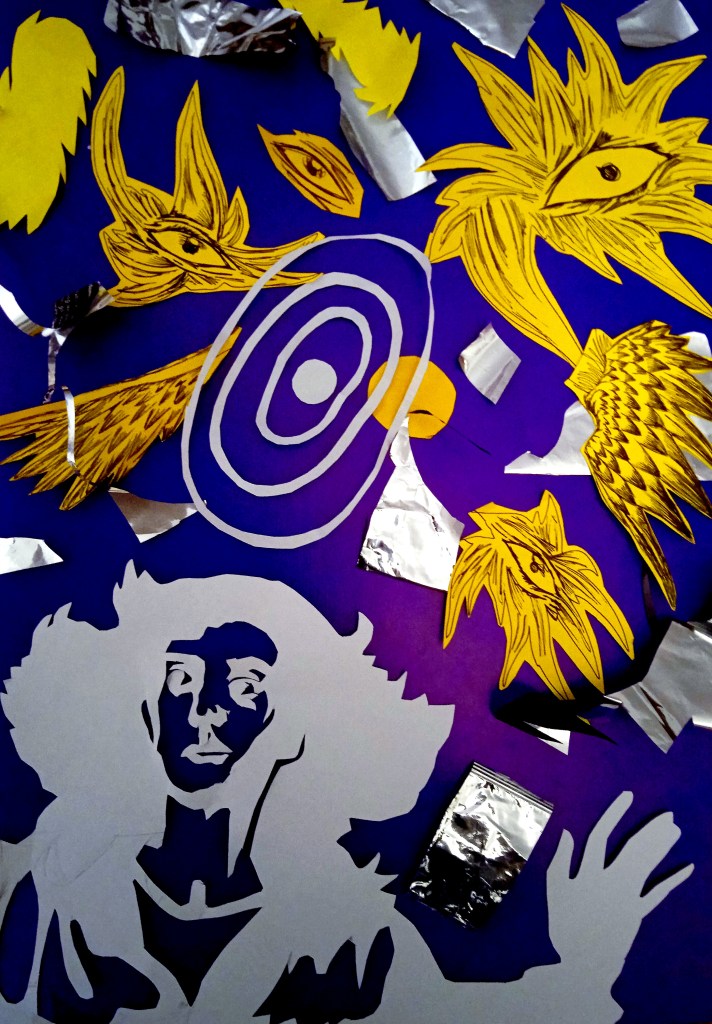
“In the house, where there are only rocks, I was born a long time ago, back in the last century…there I look for moments of white fragments, those that wounded my thin hands…I look at the stars and probably someday they will be warmer and warm me…but I forget at night in my sleep everything that was before, and a new day, like a stream, washes away the stones on the old ledge of the rock…And I start to build my little house from scratch…”
The Sea-Sandal Maker on the Cliff
His name is Bhima. He reminds you of his namesake character in the Mahabharata with his six-foot-plus frame, a big head, broad shoulders, and long muscular limbs. Only the menacing and lethal club is missing from his hands. But if you only see his hands, you could mistake him for a Bharatanatyam or kathakali dancer with agile, expressive, and communicating hands. After watching his working hands, I was reminded of the book title Part played by labor in the transition from ape to man which I had read a long time ago.
I had landed in the beach town after suffering a mental breakdown. I had recovered somewhat before the journey and I thought a beach break would help me heal well. I had packed my favorite water sandals for the trip, but after the first day at the sea and beach, I found that the soles of my sandals had split and come unglued like the open mouth of a crocodile. I was naturally upset and when I asked around the beach for a place to get it fixed, I was referred to the sea-sandal maker up the cliff. That is how I landed in Bhima’s shop the next morning.
A gentle giant with his eyes and hands focused on the only thing he cared about—sandal making. For a big man, he had ample working space around him and beyond. A big head full of pitch-black hair combed back, large eyes, a sharp nose, and agile purposive hands. He could be a sculptor, a painter, a fine craftsman, an eye surgeon, or even a neurosurgeon based on his hand-eye coordination. His work area generated an aura of curiosity and reminded me of the office-cum-lab of an eccentric anatomy professor from my medical school days with all forms of stuffed body parts in jars and bottles—organs, tissues, ligaments, skull, bones, cartilage, and whatnot. There were all sorts of plastic materials, deeply weathered, whole, parts, and pieces of all textures and colors stored in containers of different shapes and sizes keeping Bhima’s company. Apart from all this stuffed plastic exuberance, I found somewhat neatly displayed well preserved wooden and metal toys, some of them even brightly colored, most others fading, which all generated even more curiosity in me.
My brother doesn’t like to be bothered when he is working. The young woman beckoned me to a side room with shelves displaying sandals of different sizes. The room served as the business and sales office of the shop. The youngest in a family of four siblings, she was a petite chatty woman, while the sandal maker was the oldest, biggest, and tallest, as was clearly evident from the group photograph displayed in the shop. I told her, the way he works, he is a maestro—the focus, the concentration, the joy he seems to derive from sandal making—it seems as though he is sculpting, painting, or composing music. He has the joy of Hariprasad Chaurasia, Amjad Ali Khan, Ravi Shankar, or the jazz musicians Miles Davis, John Coltrane, Thelonious Monk, Sonny Rollins, or Louis Armstrong.
She took over the conversation and continued excitedly. Yes, he is very passionate about it, and enjoys sandal making. It is his art, or music, or creature of beauty. He grew up on the beach playing cricket, swimming, and fishing. He would go with fishermen on their boats from the age of eight or nine. One day he was running along the beach chasing crabs. He would have been eleven or twelve. He found this blue sandal on the beach, washed ashore by the waves, well-preserved, exquisite, beautiful. He started wearing it on the beach, it fit him well and he fell in love with it. It was made of some form of dense plastic and when he grew up, he wanted to make sandals like the one he found on the beach as a boy. That is what he started doing when he turned eighteen. He first apprenticed with a shoemaker though Bhimanna made only sandals. When he started his own store, he decided to use only scavenged plastic regurgitated by the sea onto the shore. It is hard work but that has made these sandals sea water resistant. He still keeps that blue sandal, his inspiration, displayed in his room.
I was reminded of chefs who scavenged the forests for leaves, flowers and tubers to make special dishes, and some environmentally sensitized folks concerned about food waste practicing dumpster diving near grocery stores to retrieve usable fruits, vegetables, and other goods. She interrupted my thoughts—this is his second shop. He moved into my place after being forced out by his family. But that is another story. I gave my sandals for repair and she asked me to pick them up the following afternoon.
I headed to the beach early morning the next day but didn’t spend a lot of time in the water. I saw a few teens collecting plastic materials thrown back by the sea. I asked them how the recycling of plastic works. The high-quality plastic we sell to the sandal maker on the cliff. We take the rest of the collected stuff to the recycling center.
How does recycling really work? How effective do you think it is? I pressed.
Some of the better stuff the center folks sell to clients who are into small manufacturing—plastic toys, plastic bottles, containers, lids and such. The rest of the collected material gets burned or goes to a landfill.
I went to Bhima’s shop mid-afternoon and was surprised and pleased to see him relaxed sitting on a chair with a cup of tea and the day’s newspaper. He beckoned me to take a seat on a nearby chair and asked the shop-hand to get me a cup of tea. I had grown curious about his sea-sandal line of work and decided to use the occasion and the setting to find out more.
What got you into sandal making in this way? I asked him outright.
I grew up practically on the beach; you could add in the sea also. I used to take long walks on the beach mornings and evenings day in and day out. Some days, I would go with the fisher boys in their rickety kayaks, fishing or just seafaring. Other days, we would just sun and swim, or play cricket, football, or beach volleyball before it became a popular sport showcasing shapely women in bikinis. Or, we would just run and run on the beach, chasing each other like stray dogs do, wrestle on the sand, sometimes in the water, and then start tagging one another all over again. The fisher boys and I grew up on the beach like weeds in a garden, or crabs on beach sands, unconstrained; we were the beach urchins.
In the olden days when I was growing up the beach was cane sugar sand, pristine with sea shells of various shapes, sizes, and even colors. You would see crabs and turtles playing hide and seek along with the kids out there, and you would find snowy egrets and pelicans all the time. Now it is all mostly brown sugar and dark chocolate sand, and throngs of crows pecking on garbage strewn on the beach.
Slowly, I started noticing plastic waste on the beach. It was solitary, isolated and scattered initially. My fisher friends and I would remove them all. Gradually the dumping of plastic increased over time, and at one point it became a flood. I also noticed something strange. The sea was also returning and regurgitating much of the plastic it had swallowed, or had been dumped into the sea. By that time a recycling center had opened up nearby and we would carry as much of the waste as possible to the center.
How did you become a sandal maker rather than a shoe maker, I asked him.
I remember that day quite clearly my friend. It was a morning of turbulence. Dark clouds had amassed on the horizon. The waves appeared darker, foamy and frothy as if the sea was mad at the dark dense sky and the dark clouds were instigating the waves. Even the sugary sand appeared darkened. The fishermen didn’t sail out and stayed home. Even the fisher boys didn’t want to venture out on kayaks. But we all jumped into the sea and horsed around riding the rough waves. When I got out of water beaten up by the marauding heavy blunt waves, my eyes caught sight of this pair of exquisite dark blue sandals that had washed ashore. I went near and picked them up as if they were golden sandals. They were weathered by the saltwater, but in a way, they looked like freshly caught sea bass. I tried them on and they fit my feet perfectly. They were made of high-quality plastic, were light weight, and form fitting. I waded into the rough sea wearing my new sandals and I could swim well and hop on the sand with my feet latched in. And I really liked the feel of the sandals on my feet. And the idea entered my mind—why not try to make sandals from the plastic getting collected on the beach?
This was at the back of my mind when I started my apprenticeship in shoe repair and sandal making. After I set up shop on my own, I decided to try out my ideas. Early morning and late evening I wandered the beach to collect usable plastic for sandal making. Soon I had two apprentices to help me out with quality plastic scavenging and sorting.
I made a few sandals trying out different designs, finally narrowing it down to two—one for men, and another for women. Slow to gain visibility in the beginning, it started taking off and soon the sandals began selling well, particularly among the tourists. Later, it became popular with the locals also. But there is more to my story. If you drop in tomorrow, we can chat more.
Saying this he got up and brought me my sandals. How beautifully done, I thought. Thanking him and telling him I would be back the next day, I left.
The following afternoon I found him in a thoughtful mood smoking a cigarette. Sandal making was a big success and I was quite happy. I got married to my childhood sweetheart and started raising a family, two cute daughters with just a year’s gap separating them. They grew up quickly and life was good. My wife started teaching in an elementary school. And then a few years ago I was forced to move out of my house.
What changed suddenly, I asked.
He took a long drag on the cigarette, filled his mouth, and slowly puffed out the smoke making blue circles in the air. Like soap bubbles blown up through a straw the smoke circles rose up and became fuzzy. Bhima’s gaze followed them one by one to the ceiling. That is a hard one to answer. Let me try. He took another puff, called out to his shop assistant to bring two cups of tea, and then continued his narrative. A pensive look came over his face.
One of our neighbors, an elderly couple, moved out and in their place a much younger couple moved in. The man appeared to be ten or fifteen years younger than me, was a freelance photographer, and the woman worked in a local office.
I started spending an enormous amount of time in the new couple’s home and hung out a lot with the photographer. Normally, this should not be of any consequence, but I have to make a confession here. On rare occasions I have been attracted to men and I noticed this feeling only after I grew up. I would not affix the bisexual label on me, and I had discussed this phenomenon with my wife earlier, much before we got married. And I had been faithful to her.
The photographer and I had set clear boundaries. I don’t know what transpired between the photographer’s wife and mine. My wife became suspicious first and later my daughters also. Some form of intolerance developed in them which I could never really fathom or explain. I was a little different but not too different or deviant. Even heterosexuals get attracted to others but they set bounds; it doesn’t seem to cause intolerance, maybe some jealousy, that is all.
The intolerance made me move out. I was worried it would soon evolve into hatred. My younger sister welcomed me in. She had been ostracized by the family, not by me, for her lesbian relationships.
She takes care of me, and I love her. I also find solace, purpose, and meaning in making sandals from the pickled plastic spit out by the sea. I give life, shape, form, beauty, and function to the plastic which cannot be digested by the sea. I am making a man and woman out of it.
He was indeed making beautiful well-designed sandals for men and women. I stared at Bhima and his six-foot frame. His eyes were looking out through the shop window towards the sea. I bought a new pair of blue sandals and put them on. I looked into Bhima’s eyes and saw the setting sun reflected in his eyes. I climbed down the cliff and walked slowly towards the sea to see the orange sun dip into the warm wavy waters. I saw a solitary sailboat headed towards the horizon. My thoughts were not of the Bhima of Mahabharata wielding his giant club. I was thinking of the Bhima on the cliff who crafts sandals out of the plastic returned by the sea as the large orange circle kissed the waves and slowly entered its depths. The lonely sailboat framed against the dipping sun and different footprints left by the sea sandals on the beach sands seemed to blend and merge man, woman, and nature in strange, harmonious, and unpredictable ways.
The Blue Angel
By John Grey
The voice is lower than the light.
The song, the dark place in the voice.
Sequins flash like brief angels.
Eyes mirror the scene like ghosts.
The odor is of beer and death.
When done, does she suck on the veins of the music,
of the enrapt school-teacher, of the drunks
and the dread, the abandoned midnight hour?
What becomes of the bodies and the moon?
The glasses? The musicians?
The slinky ardor and the hard ice glare?
A ripple of applause breaks out across
the crackling celluloid.
How much of it is hers?
To: Persephone
By Alarson
Walk with me, my friend. Wrap your delicate worry-worn fingers around my arm and fall into step by my side. Last year’s bones snap under our footfall and new poisonous green buds come forth overhead. The place hangs in the balance, on the cusp of what was and what will be. As do you. What magnificent new decisions will you make?
Walk with me, my dear. Press your fragile dry palm against mine and pull me in deeper. Embolden me with your shadow as we stride into the unknown. What exquisite horrors will we encounter? Will it be a fray of squirming beetles, feasting upon a fallen tree’s decaying flesh? Or perhaps flaxen and ivory primroses peeking out of the eye socket of a discarded vulpine skull?
Ma semblable, mon amie, mon âme sœur1,
To continue watching you grow would be an honor.
1 My fellow creature, my friend, my soulmate.
From: Spring.
Carpé Diem, mes jeunes amis,
Nous vivons sur du temps volé.
Le soleil a posé son manteau de nuages,
Vous pouvez retirer les vôtres.
Empilez-les en offrande à Apollon;
Puis allez jouer dans les pétales et les reflets.
Riez, criez, de crainte que le silence vous envelope.
Courez! Vite, avant que l’épervier des heures vous rattrape.
Vos idées postmodernes surviennent en un court tour de montre.
De vos petites mains maladroites, combinez baroque et étoiles biscornues—
Carpe Diem, les enfants.
Nous vivons sur du temps volé.2
2 Carpe Diem, my young friends,
We live on stolen time.The sun has taken off his coat of clouds,
You may remove your own.
Pile them up as an offering to Apollo;
Then go and play in the petals and the sunlight.Laugh, shout, lest silence envelop you.
Run! Quickly, before the sparrowhawk of time catches you.
Your postmodern ideas arise in the short circle of a watch.
With your awkward clumsy little hands, combine baroque and crooked stars—Carpe Diem, children,
We live on stolen time.
To: Persephone.
The chilly early morning wind whips the length strap of your backpack sharply against the side of your thigh. The countryside speeds past with the rumble of your motorbike and you catch the scent of ripe barley rippling in the field to your right like an endless ocean of gold. Seconds later, you are engulfed in the welcoming shady arms of a pine forest; all dark green needles, blue shadows and that distinct woody fragrance.
You push your bike a little faster, relishing in the deep almost-growl it lets out. You can barely hear yourself laugh over the sound, even locked into your helmet with your visor all the way down. Your heart races as you lean into a bend, following a long line of colossal old pine trees, your tires nearly brushing the luxuriant ferns that grow at the side of the road. A blackbird flies across your path, so quick it’s barely a shadow. You exhale another laugh and it fogs up the inside of your visor. Dangerous, since it blinds you momentarily but your stomach swoops in a motion completely opposite to fear.
Soon, more fields stretch out on either side of you, interspersed here and there with little villages and farms. You try to glance at each of them as you rumble past, recalling the first time you rode a motorbike: a chest-tightening fear that made you want to throw up. Now, as a nice cool sheet of rain comes down and glazes the surrounding landscape in what it needs to grow so green it’s sickening, all you feel is joy.
You are free, Persephone, grow, run, make. And, of course, Carpe Diem.
Journey to the Sea
By Edward Alban
Yellow and bright as gold
your waves guide me to the shore.
Serenity takes up residence in my heart
as sad men and women
lament through the speakers
of the car door.
My eyes may roll here and there
at the stories told to me
“for the first time”-
for the fifth time. However,
I know I will smile at the stories
when I am older and know
how to appreciate things in life.
We leave the stagnant farm lands
and enter into a world
dominated by restaurants
And block to block bargain swim shops.
We only glance at their excitement
as we park near the sand.
The Kind of Thing You Can’t Undo
“God, everything looks exactly the same.”
Caty nods in agreement as she turns from the sink to the kitchen island, a glass of filtered tap water in each hand. She passes one off to Josephine, who offers a tiny smile but doesn’t drink it, setting it on the granite instead, staring at it like she’s never seen anything more interesting. So that’s it, Caty thinks, her own glass tight in her fingers. We don’t see each other for a few years, and we’re strangers. Though maybe twenty years is a bit more than a few, and maybe she was never that close to her husband’s older sister to begin with. Josephine never comes to family holidays; to hear her parents tell it, she doesn’t respond to their calls at all. She’d told Jacob it would take nothing short of a funeral to bring her back into the fold. That wasn’t supposed to be what happened.
“Yeah.” Caty raises her glass to her lips, takes a drink. It’s ice-cold going down, burns the lining of her throat. “We just…never got around to changing any of it. Always too expensive, or time-consuming, or…” She shrugs. Heavy as they are, the words drape themselves over the garlands she hasn’t yet mustered the energy to take down. It’s early January, the ground frozen solid and hard to dig. Part of her is grateful Jacob chose to be cremated. One less thing to worry about, more time to focus on the five million others. “You look different, though.”
Josephine smiles, hiding her teeth behind painted lips. Caty could have sworn they were fuller last time they met, though perhaps her imagination is being kinder to Josephine than time itself. Two decades ago, her hair was longer and dyed a pale red; it’s darker now, sits just above her shoulders. Her face is softer, crow’s feet more prominent. The eyes are the same, though. Cold blue. Jacob’s eyes. “So I’ve heard,” she says, humming a laugh. Her hands splay across the countertop, nails trimmed short. “Plenty of people had no problem telling me that.”
It’s not a dig at her. Caty knows it isn’t, but she can’t stop herself from wincing like it is, because it so easily could have been. No one would’ve blamed Josephine for holding a grudge if they knew what their half-friendship had been like all those years ago. Many a night she’s lain awake in bed, Jacob snoring next to her, and replayed a million family arguments to which she’d stood a silent witness. Maybe if she’d been more willing to defend Josephine’s decision to cut contact—to say anything at all—the tension in the air wouldn’t be so thick. Josephine wouldn’t be looking at her like she’s brand-new.
But she looks different too, doesn’t she? Her body worn from years of use; she imagines cartilage wearing away between her joints, making them crack. Honey-blonde dye over more grey hairs than she can count. She takes another drink to avoid looking Josephine in the eye. “Did they—I mean, were they nice to you? All things considered, I guess.”
Josephine stares down into her own glass like she has to think about it, and the vise grip that’s been omnipresent in Caty’s chest ever since she got the call, two days before the funeral, tightens. “Yeah. For the most part. It’s easier to put up with knowing I can leave whenever I want.” She shrugs; the movement pulls Caty’s attention to her dress, its cap sleeves, the jut of her collarbone. “I think nobody knows what to do with me. And that’s fine. The less they think about me, the better.”
Despite her words, she speaks with a tone as matter-of-fact as if they were discussing the weather, and Caty can’t help but wonder how long it took her to develop the amount of practiced indifference she now possesses. Caty herself is an only child, the result of years of infertility that left her siblingless, and despite years and distance, she still speaks to her parents every day. They’re put up in a hotel room now, trying to give her the space she needs while remaining close, and Josephine is navigating the death of the only family member who still spoke to her on her own. It’s unfathomable to her. The worst thing she could imagine—one of them, anyway. At least she has people to talk to.
The screech of the front door cuts them off before Caty can even begin to respond, and her daughter Jenna barrels in, stopping short when she sees that Caty isn’t the only one in the kitchen. Her eyes—Jacob’s eyes, Josephine’s eyes—narrow as she stares. Trying to figure out where she’s seen Josephine before, maybe, besides at the wake that ended a couple hours ago. They’ve never been so close to each other; the thought is a static shock down Caty’s spine, setting her on edge. Josephine attempts another close-lipped smile, but it looks more like a grimace. Jenna, turning to Caty, doesn’t even bother. There’s too much of Jacob in her face for the stranger in her mother’s kitchen to be anyone else. “What is she doing here?”
Caty sputters, her face heating; Josephine raises an eyebrow and finally picks up her water to take a drink. A drop of water clings to her lipstick when she puts it down. Once it becomes clear Caty is too flustered to answer, she turned to Jenna—who stares, stubborn, at the wall behind her—and says, “I’m here for the wake. Your mother invited me over so we could talk before I leave town.”
Jenna looks back and forth between the two of them for what feels like an eternity. There’s nothing quite like the judgement of a teenage girl—Caty knows it well, from her own adolescent years—but there’s something more in her stare. Something mean. But whatever she’s thinking, she doesn’t voice. “Dylan invited me to the movies,” she says instead, like a question, turning her attention to Caty.
It’s chilling, in a way, to remember that life goes on. That people deal with their grief differently, and Jenna’s not necessarily going to be like her, curled up in bed and sobbing for hours at a time. “That’s fine, as long as you keep me up on where you are,” she says, and crosses the kitchen to hug her. Jenna accepts the gesture with the exact amount of stiffness and awkwardness Caty expected and then leaves, casting a single backward glance at Josephine before she goes upstairs and the door to her room shuts.
Caty winces at the noise. Turns back to Josephine, whose arms are crossed over her chest. “Sorry about that,” Caty says, and she wants to touch her, reach out and hug her the same way she’d hugged Jenna in the hospital room when they pulled the plug on Jacob’s life support, but it’s been twenty years and if Josephine wasn’t fond of physical affection then, who knows how she’ll be now. “She’s—you know how they are. You were a teenage girl once, too.” She laughs nervously. “She just turned nineteen a couple weeks ago.”
The number hangs in the air between them—the point of a knife above their heads, ready to drop. “Nineteen,” Josephine repeats, looking down at the floorboards. “Did you ever tell either of them?”
The question she was hoping Josephine wouldn’t be brave enough to ask. She shakes her head. “I know I should’ve, but it never seemed like the right time, and since you’re not around anymore, I thought…” She lets herself trail off. Every excuse that comes out of her mouth sounds flimsier than the last. Josephine had still been in contact with her brother, after all. “I don’t know what I thought. That it wouldn’t matter, I guess. That we’d tell her when she got older. And then Jacob got sick.”
Josephine doesn’t look upset. It’s a small miracle that she doesn’t look upset. I don’t know if I ever really expected you to,” she says. Her eyes drift towards the family photo on the wall—the three of them at Jenna’s high school graduation. Right before they got the news. The last picture of them as a happy family. The corner of his smiling mouth creases the same way Josephine’s does. “It would’ve broken his heart.”
The affair lasted exactly one night, a week or so before Josephine left town for good. Jacob was away on business, and Caty didn’t want to be in the new house alone; she wasn’t yet used to the way the stairs creaked underfoot, the way the house groaned at night, like a living thing. Josephine brought a bottle of champagne as a housewarming gift, which they’d mixed with the quarter-bottle of orange juice in the fridge, producing mimosas that were mimosas in name only. They were both lightheaded within the hour. Reruns on in the background, all the lights off. One thing led to another—and another, and another. Things she’d never felt before, things she didn’t want to examine.
The positive pregnancy test came a week later.
If she’s being honest with herself, a big part of the reason she kept quiet all these years—besides the insistent chorus in her head of it doesn’t matter—is because nothing has ever made her feel like that again. Not even her own husband. Josephine’s brother.
“It would have,” she agrees. Despite the water, her mouth is dry; a film forms over her tongue, the taste of rot. “And then it didn’t seem worth it anymore. We knew he didn’t have long left. I didn’t want him to spend all of it wondering. Or to ruin his relationship with you.”
Josephine exhales sharp, in what might be a laugh. She opens her mouth only to be interrupted by the blare of a car horn outside; the thud of Jenna going down the steps and out the door without so much as a goodbye is muffled in Caty’s ears as she presses a hand to her chest. “I…appreciate that, I guess,” Josephine says after a few seconds of ringing silence. “I never—the last thing I’d ever want to do is hurt him.”
And that’s what it all comes down to, isn’t it? The path of least resistance, the one that keeps the family unit intact. Never mind that she’s spent all this time thinking about what might’ve happened had a million little things been different. They’re not, and Josephine’s going to leave town in the morning, and Caty will, in all likelihood, never see her again.
The thought jars her into action; she steps around the corner, close enough to smell her perfume, citrus and sandalwood. “Can I—?” Her arms lift, drop back to her sides. A couple feet away, Josephine stands frozen, perfect marble, her face impassive save for a slight widening of the eyes. It’s hard to breathe; her diaphragm has folded, lodged itself somewhere between her lungs. “Sorry, I didn’t mean to—”
“No,” Josephine says at the same time, “it’s okay, I just—” They both stop, laugh awkwardly to cover the mistake. And when they step forward and wrap their arms around each other, it’s like no time has passed at all.
It’s just a hug. They’re both too broken for anything more. But they fit together comfortably; in her heels, Caty is just tall enough to rest her head on Josephine’s shoulder and feel anchored, like she can close her eyes and not worry about balance. Josephine is shaking, the slightest tremor in her hands on Caty’s back, and it’s clear by the rhythm of her breathing that she’s trying not to cry. Caty isn’t as successful, though she manages to keep her tears silent, and if Josephine feels them soaking into the sleeve of her dress, she doesn’t say anything.
The squeal of the hinges, again, is what gives Jenna away. Caty’s eyes snap open as soon as she hears it, and her stare catches on her daughter’s, though she can’t bring herself to pull away from what now feels like the cold comfort of the embrace. She notices, for the first time, the patter against glass: it’s warmed up just enough to rain, and Jenna came back for the umbrella by the front door, which is in her hands. She looks at Caty like she’s never seen her before, and she closes her eyes again, unable to bear the scrutiny.
This time, when Jenna leaves, she slams the door behind her.
I will not lose…
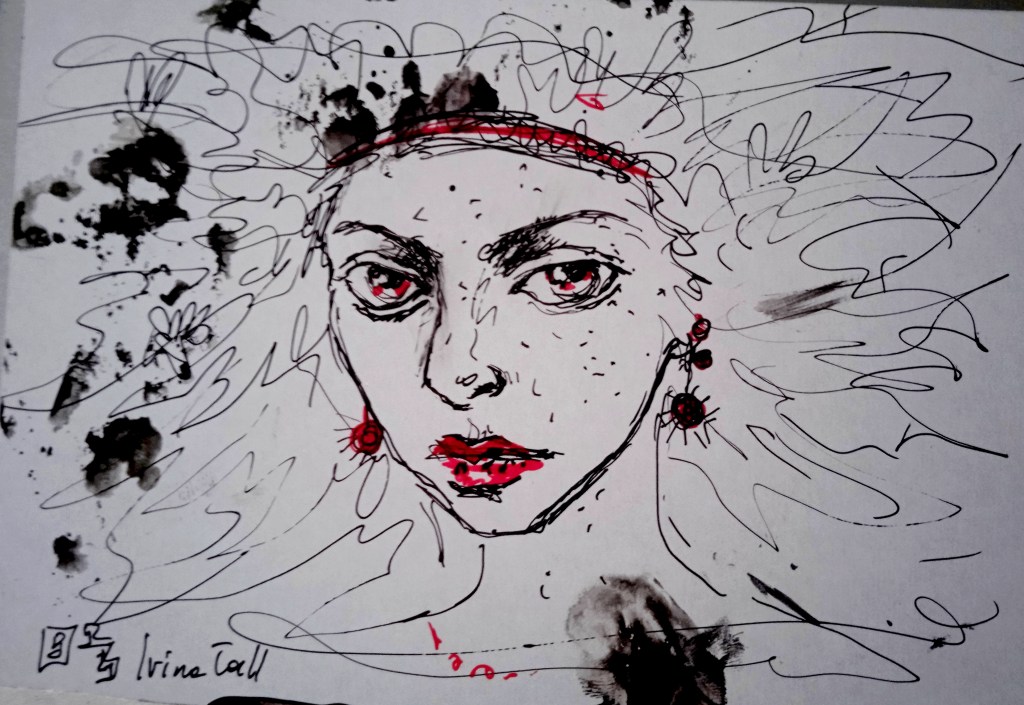
“In the house, where there are only rocks, I was born a long time ago, back in the last century…there I look for moments of white fragments, those that wounded my thin hands…I look at the stars and probably someday they will be warmer and warm me…but I forget at night in my sleep everything that was before, and a new day, like a stream, washes away the stones on the old ledge of the rock…And I start to build my little house from scratch…”
 Skeleton Flowers Press